49. Revolution (Molting)
革 · Gé · La Rivoluzione (la Muta) · lines from the bottom: 101110
The two trigrams
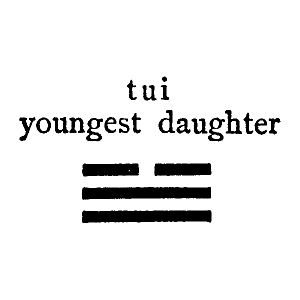
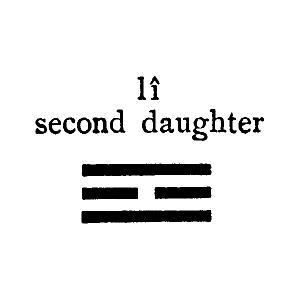
The Judgement
This hexagram tells you something simple: the change you have in mind is right, but nobody will believe in it until it is done. It is no accident that you sense distrust around you, perhaps at home or among colleagues: a real turning point, such as a new job, the end of a habit, a decision that reorganises the family or the finances, is accepted only once it is accomplished and its fruits can be seen. The ancient text promises great progress and success, but on two precise conditions: that the need for change be real and proven, and that you carry it through with firmness and correctness, without shortcuts and without haste. If you respect those conditions, every cause for regret disappears on its own. The practical advice is this: do not announce the revolution ahead of time, prepare it carefully, and let the results speak for you. Whoever changes well has no need to convince anyone in advance.
Source: James Legge, The Yî King (Sacred Books of the East, vol. XVI) (1882) · read the original passage
The Image
The image is that of a lake with fire in its midst: water and flame cannot coexist for long, one must transform the other. From this, Legge says, the wise person learns to regulate his calculations of the heavens and to make the seasons and times clear. For you it means something concrete: every change has its moment, like sowing and harvest. Before changing home, job or relationship, look at the calendar of your life: the deadlines, your energy, the people involved. Make a plan with real dates, and you will govern the season instead of enduring it.
Source: James Legge, The Yî King (Sacred Books of the East, vol. XVI) (1882) · read the original passage
The six lines
First line
First line: you feel bound, as if wrapped in the hide of a yellow ox, and you cannot move yet. It is no accident: the change you would like is too early, and you have no one above to help you. Do not force anything. Be careful not to mistake impatience for courage: for now hold your place, observe, gather strength and allies. The moment to loosen the ties will come, but it is not now.
Source: James Legge, The Yî King (Sacred Books of the East, vol. XVI) (1882) · read the original passage
Second line
Second line: here the change comes after some time has passed, and precisely for that reason it works. If you have waited, listened, and let the situation ripen, now you can act: the text promises good fortune and no error. It is the right moment for the proposal you kept postponing, the interview, the clarifying conversation in the family. You have sincere support from someone above you: use it with measure, and go ahead.
Source: James Legge, The Yî King (Sacred Books of the East, vol. XVI) (1882) · read the original passage
Third line
Third line: careful, an action taken on impulse now would do harm, and even with the best intentions your position remains risky. You are strong and you are right, but you stand on the edge, and strength can turn into violence. The text gives a simple rule: if the change you have in mind has been discussed three times, fully, with those involved, then they will believe you. Talk, talk again, listen to the objections; only then move.
Source: James Legge, The Yî King (Sacred Books of the East, vol. XVI) (1882) · read the original passage
Fourth line
Fourth line: causes for regret vanish. You stand next to those who decide, and conditions favour you even if something in you is not perfectly aligned. The key is trust: if people believe in you, you can change even the established rules, at work as at home, and good fortune will follow. Before touching the rules, though, make sure you truly have that trust; then act with decision.
Source: James Legge, The Yî King (Sacred Books of the East, vol. XVI) (1882) · read the original passage
Fifth line
Fifth line: here is the great person who changes as the tiger changes its coat, with stripes even more brilliant. The change you bring is visible, clear, recognisable by everyone, and trust was granted to you even before you consulted the oracle. It is the right moment to take the situation in hand: a reorganisation, a family decision, an important financial choice. Do it with style and transparency, and it will benefit everyone.
Source: James Legge, The Yî King (Sacred Books of the East, vol. XVI) (1882) · read the original passage
Sixth line
Sixth line: the change is now complete. Those of worth transform as the leopard changes its spots, in a refined and orderly way; small people change only their faces, and show obedience. Do not ask for more: pushing further ahead now would bring trouble. The advice is to stop, consolidate what you have gained and remain steady and correct. In love or at work too, after a turning point, there must be a quiet phase in which the new things settle.