43. Breakthrough
夬 · Guài · Lo Straripamento · lines from the bottom: 111110
The two trigrams

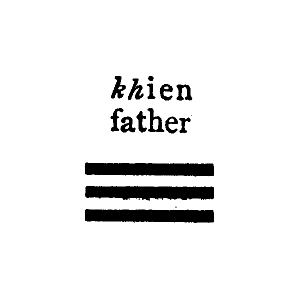
The Judgement
This hexagram describes the moment when the last remnant of a problem is about to be swept away: five strong lines push upward against a single weak line that still resists, like the last cold days before summer. In life it is the situation in which you must finally confront a harmful person or habit that has held out for a long time: a colleague who works against you, a behaviour in the family that can no longer be tolerated, a vice that has kept you in check. The old text tells you how to proceed, and it is not with brute force. First: bring the matter into the light, before everyone, as guilt is exhibited in court, instead of grumbling in the corridors. Second: sincerely ask for the understanding and support of others, knowing that what you are doing involves a risk. Third: let those close to you, your own people, know that you do not intend to resort at once to harsh measures. Only in this way, says the text, will there be advantage in whatever you undertake. The practical advice: prepare the facts, speak openly, seek allies, and keep harshness as the last resort, not the first.
Source: James Legge, The Yî King (Sacred Books of the East, vol. XVI) (1882) · read the original passage
The Image
The image is heaven with the water of a marsh rising above it: it is water evaporating, becoming cloud and then coming back down as rain, distributed over everyone. The wise person, in accordance with this, bestows rewards on those below them and cannot bear to let their gifts accumulate undispensed. In practice, if you have something to give, recognition, money, time, skills, do not keep it locked up waiting for the perfect moment: let it circulate. Whoever holds back, stagnates; whoever distributes, grows. The advice: if you need to thank, pay or promote someone, do it this week, without waiting to be asked.
Source: James Legge, The Yî King (Sacred Books of the East, vol. XVI) (1882) · read the original passage
The six lines
First line
In the pride of strength you advance with your toes: you go forward, but you will not succeed, and there will be ground for blame. You are at the beginning, low down, and the preparation is too small to guarantee victory: whoever takes the field so early only risks getting hurt. If you feel like confronting head-on a problem that has irritated you for a long time, wait: it is not yet the moment. The advice is not to take the field now, but to gather information and allies.
Source: James Legge, The Yî King (Sacred Books of the East, vol. XVI) (1882) · read the original passage
Second line
You are full of apprehension and appeal for sympathy and help: you have the determination to do your part in removing what is harmful, but you are also prudent. Late at night, says the text, they may plot against you, but you need not be anxious about it: your caution protects you, and no attempt, however clever, will hit its mark. If you fear reprisals for a stand you have taken, sleep soundly. The advice is to keep moving with measure, without exposing yourself needlessly and without paranoia.
Source: James Legge, The Yî King (Sacred Books of the East, vol. XVI) (1882) · read the original passage
Third line
You are about to advance with a strong and determined look, and you show your intentions too openly: this leads to harm. But the wise person, bent on cutting off what is harmful, walks alone and encounters the rain, that is deals with the problematic person to the point that their own companions look at them askance, as if they were contaminated. In the end there will be no blame. If you must deal with someone others avoid, in order to truly resolve the matter, accept the temporary misunderstanding: your integrity will be recognised.
Source: James Legge, The Yî King (Sacred Books of the East, vol. XVI) (1882) · read the original passage
Fourth line
This line describes someone who has been harshly punished and now walks slowly and with difficulty: a person who has already paid for their mistakes and cannot find peace. If they let themselves be led like a sheep following its companions, every cause for regret would disappear; but they hear these words and do not believe them. If you recognise yourself in someone who, after a beating, insists on going their own way, listen: this is not the time to act alone. Follow those who know the road, at least for a while, and the pain will ease.
Source: James Legge, The Yî King (Sacred Books of the East, vol. XVI) (1882) · read the original passage
Fifth line
The small people are like a bed of purslain, a weed that grows in the shade and must be uprooted with the utmost determination. You are in a central position, one of responsibility, but you have a negative element too close that could contaminate you. With the right determination, your action, in harmony with your balanced position, will bring no error or blame. The advice: if you have a habit or an acquaintance that pulls you down, do not cut it halfway; uproot it, roots and all, even if it takes effort.
Source: James Legge, The Yî King (Sacred Books of the East, vol. XVI) (1882) · read the original passage
Sixth line
You have no one on whom to call, and your end will be bad. This is the line of the last remnant, the negative element left isolated at the top while everything else pushes in the opposite direction. If you recognise yourself in someone who has set themselves against everyone and now has no allies left, the text pulls no punches: alone you cannot go on for long. But a warning is also an opportunity: change course before it is too late, apologise, rebuild at least one bond. Whoever isolates themselves out of pride, loses.