42. Increase
益 · Yì · L'Accrescimento · lines from the bottom: 100011
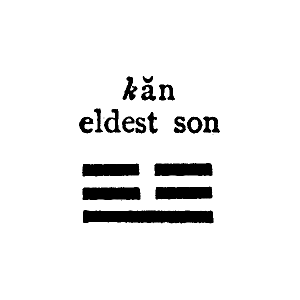
The two trigrams

The Judgement
This is the hexagram of increase, the opposite of decrease: a time in which resources grow, doors open and those above work for the good of those below. The old text is brief and generous: there will be advantage in every movement you undertake, and it will be advantageous even to cross the great stream, that is to face the undertaking that usually frightens, the big change, the step you had been putting off for years. If you feel a favourable climate around you, a boss who supports you, a partner who encourages you, a calmer financial moment, it is no accident: it is the right time to dare. It is not an invitation to imprudence, but to trust. The practical advice: take the decision you were postponing, the move, the course, the proposal, the important conversation, and take it now, while the wind blows in your favour. The difficulties you meet will be overcome precisely thanks to this momentum, and those around you will want to help. But remember that true increase is the kind that is shared: whoever receives, in this time, is also called to give.
Source: James Legge, The Yî King (Sacred Books of the East, vol. XVI) (1882) · read the original passage
The Image
The image is wind and thunder: two forces that strengthen each other, because thunder makes the wind more impetuous and the wind carries the thunder further. The wise person, in accordance with this, when they see what is good moves toward it, and when they see their own errors turns away from them. It is increase applied to oneself: growing means quickly imitating the good one meets and quickly correcting the mistakes one discovers. In practice, if you know someone who does something well, learn from them without envy; if you notice a fault of your own, do not defend it, change it. The advice: every week, one good thing to copy and one mistake to stop.
Source: James Legge, The Yî King (Sacred Books of the East, vol. XVI) (1882) · read the original passage
The six lines
First line
It is advantageous for you, from your position, to make a great movement: if it is greatly fortunate, no one will blame you. Normally those below should not take on great affairs, but the moment favours you and you have secure support above. Only a great success, however, will excuse the boldness. If you have in mind an initiative bigger than your role, prepare it carefully and see it through to the end: halfway would not be forgiven. Done well, it will be your turning point.
Source: James Legge, The Yî King (Sacred Books of the East, vol. XVI) (1882) · read the original passage
Second line
Someone adds ten pairs of tortoise shells to your stores, whose oracles cannot be opposed: people, circumstances, even fate work in your favour, and help comes even from beyond your circle. Persevere in firm correctness and there will be good fortune. The text adds that someone with such gifts may use them to make offerings to Heaven, that is for a purpose higher than themselves. If you receive much, be worthy of it: devote a part of what comes to you to something beyond your own interest.
Source: James Legge, The Yî King (Sacred Books of the East, vol. XVI) (1882) · read the original passage
Third line
You receive increase by means of what is evil: a misfortune, a reprimand, a failure that shakes you and leads you toward the good, without blame. These are the hard lessons that make one grow. The text asks you to be sincere and follow the path of the Mean, without extremes; in this way you will gain the recognition of those who matter, like an officer who presents himself to his prince with the insignia of his rank. If you have taken a blow, do not close up: draw the best from that experience and show what you are worth.
Source: James Legge, The Yî King (Sacred Books of the East, vol. XVI) (1882) · read the original passage
Fourth line
You follow the due course and your advice is heeded by those above you: you are the person who can be relied on even in an undertaking as great as moving the capital, a relocation, a reorganisation, a change of strategy. You are close to those who decide and your only aim is the common good; that is why they listen to you. If you have an idea that could change things in your company or your family, present it clearly: right now you will find open ears.
Source: James Legge, The Yî King (Sacred Books of the East, vol. XVI) (1882) · read the original passage
Fifth line
With sincere heart you seek to benefit all those below you, and there is no need even to question it: the result will be great good fortune, and everyone will with sincere heart acknowledge your goodness. You are in the position of one who leads, and you do it with true generosity, not calculation. This line tells you that the gratitude you receive is genuine and that your way of doing things has created a climate of trust. Keep going: sincerity is your best strength.
Source: James Legge, The Yî King (Sacred Books of the East, vol. XVI) (1882) · read the original passage
Sixth line
No one contributes to your increase, while many seek to assail you, even from beyond your circle. You have reached the top and think only of increasing your own, without caring for those below; and your heart follows no steady rule, one thing today and another tomorrow. There will be harm. If you recognise yourself in this line, it is a clear warning: selfishness in a position of advantage attracts hostility. The advice: go back to giving, and set yourself a rule of conduct that holds every day.