35. Progress
晉 · Jìn · Il Progresso · lines from the bottom: 000101
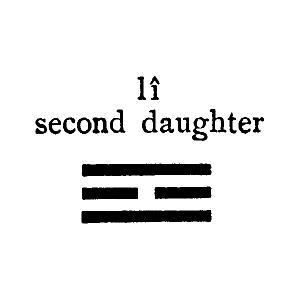
The two trigrams

The Judgement
This is the hexagram of progress, and the old text describes it with a precise image: a prince who has brought peace to his people receives many horses from the king as a gift for this, and is admitted to the king's presence three times in a single day. Translated into your life: someone who has worked seriously for the good of those around them, a team, a family, a company, is now recognised and rewarded by those higher up. If you finally feel seen, if they call on you more often, if acknowledgements arrive, it is no accident: it is the fruit of what you did for others, not only for yourself. Progress here resembles the sun rising in the morning, clearer and clearer until full day. The practical advice: accept the invitations and openings offered to you, present yourself simply, and remember that what brought you this far was care for others, not ambition. Keep going along that road.
Source: James Legge, The Yî King (Sacred Books of the East, vol. XVI) (1882) · read the original passage
The Image
The image is the bright sun rising above the earth: first the dawn, then full light climbing toward noon. Faced with this sight, the wise person devotes themselves to making their own virtue, the best part of themselves, even brighter. It is not an invitation to show off, but to work on what truly matters: honesty, competence, kindness, clarity. If the moment carries you upward, use the visibility to let real qualities shine, not appearances. The practical advice: pick one thing you are good at and make it your recognised strength this year, cultivating it every day like the sun climbing one degree at a time.
Source: James Legge, The Yî King (Sacred Books of the East, vol. XVI) (1882) · read the original passage
The six lines
First line
You want to advance and, at the same time, you feel held back: you are at the beginning, your support is weak and those who matter have not noticed you yet. The text asks two things of you. The first is to remain firm and correct: that way good fortune will come. The second applies if no one trusts you yet: keep a large and generous mind, without resentment and without closing up. Do not rush to assert yourself; do your work well and let time speak.
Source: James Legge, The Yî King (Sacred Books of the East, vol. XVI) (1882) · read the original passage
Second line
You seem to be advancing, and yet inside you are sad: you move on, but with a weight on you, perhaps because the person who should support you is as weak as you are or does not respond. Keep a straight course, firm and correct, and good fortune will come. The text promises a great blessing that comes from the grandmother, that is from a mild and protective figure, a gentle and unexpected help from someone who cares for you. Do not close the door on affection: that is where the turning point comes from.
Source: James Legge, The Yî King (Sacred Books of the East, vol. XVI) (1882) · read the original passage
Third line
Everyone around you trusts you: colleagues, friends, family share your same desire to move forward, and this common trust makes every cause for regret disappear. If before you feared being out of place or lacking the right credentials, now you see that what counts is the shared intention. The advice is to lean on this network without embarrassment: ask for help, offer help, and move together.
Source: James Legge, The Yî King (Sacred Books of the East, vol. XVI) (1882) · read the original passage
Fourth line
You seem to advance, but you do it like a marmot, stealthily, grabbing what you can: a position won by unclear means, without the consent of those around you. Even if you try hard to be correct, the position is dangerous, because it is not the one that belongs to you. If you recognise yourself in this, stop now: give up the small advantages obtained in secret, before someone notices, and return to a path in full daylight.
Source: James Legge, The Yî King (Sacred Books of the East, vol. XVI) (1882) · read the original passage
Fifth line
Every cause for regret disappears: the right person has recognised you, the meeting you were waiting for has taken place. But the text gives you a precious piece of advice: do not torment yourself asking whether you will succeed or fail. Do the right thing and let go of anxiety about the result, because things are arranged so that advancing will be fortunate and advantageous in every way. Allow yourself to trust the moment, without controlling everything.
Source: James Legge, The Yî King (Sacred Books of the East, vol. XVI) (1882) · read the original passage
Sixth line
You advance with your horns forward, that is with a strength that threatens: but you use it only within your own house, to restore order among those who do not respect the rules in your own sphere. The position is risky, but the outcome will be good. Yet a shadow remains: even doing everything correctly, the very fact of having to resort to harshness leaves regret. If you must be strict with a family member or a collaborator, do it, but with the minimum necessary and without taking pleasure in it.