33. Retreat
遯 · Dùn · Il Ritiro · lines from the bottom: 001111
The two trigrams
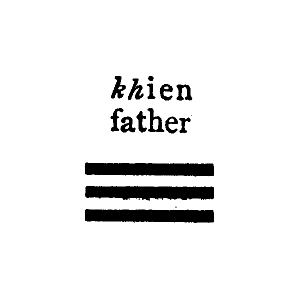
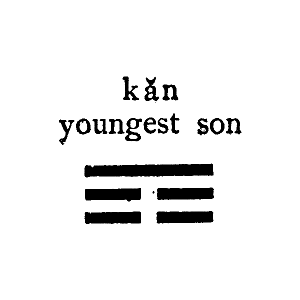
The Judgement
This hexagram tells you something simple: stepping back is not losing. If these days you feel something small and petty growing around you, a heavy mood at work, a person who keeps asking for more, a family argument that goes nowhere, the right move is to take a step back with your head held high. The old text says that even in a situation like this, progress is possible: not in the sense of winning the game, but in the sense of coming out whole, with your dignity and your strength intact. There is still a margin, small but real, where being firm and correct will give you an advantage: do not drop everything, do not abandon your rules, do not answer rudeness with rudeness. The practical advice is this: choose the moment and the manner of your retreat yourself, before others choose it for you, and do it without slamming the door. Those who retreat well today find themselves tomorrow in the best position to start again.
Source: James Legge, The Yî King (Sacred Books of the East, vol. XVI) (1882) · read the original passage
The Image
The image is the sky with a mountain beneath it: the mountain rises, but at some point it stops, while the sky keeps going up and moves away. This is how a wise person treats those who bring only trouble and pettiness: not fighting them, not showing hatred, simply keeping them at a distance through their own seriousness and composure. In everyday life this means not feeding gossip, not sinking to the level of those who provoke, not giving familiarity to those who would use it against you. It is not coldness: it is the calm of someone who knows their own worth. The advice is to let your dignity speak for you, with no need to raise your voice.
Source: James Legge, The Yî King (Sacred Books of the East, vol. XVI) (1882) · read the original passage
The six lines
First line
You are the last in line, the tail of those retreating, and the position is uncomfortable: whoever is behind risks being caught. If you feel exposed, the temptation is to rush away, but haste itself would make the danger worse. The advice is not to move in any direction for now: stop, breathe, do not sign, do not answer in the heat of the moment. Wait for the situation to become clear.
Source: James Legge, The Yî King (Sacred Books of the East, vol. XVI) (1882) · read the original passage
Second line
You have made a decision, to move away from a situation that is not good for you, and you hold it fast like a strap of yellow ox hide that cannot be broken. This is a line of quiet firmness: you do not need to justify yourself, nor to argue. If someone tries to pull you back with flattery or guilt, keep your grip: your purpose is right and its strength lies in constancy.
Source: James Legge, The Yî King (Sacred Books of the East, vol. XVI) (1882) · read the original passage
Third line
You would like to withdraw, but you are tied down: commitments, people who depend on you, habits that hold you back. This wears you out and puts you in a delicate position. The old text advises treating those who hold you with the care you would give to those who live under your roof: with patience, with measure, without harshness but also without letting yourself be overwhelmed. This is not the time to tackle the big questions: settle the small ones, one tie at a time.
Source: James Legge, The Yî King (Sacred Books of the East, vol. XVI) (1882) · read the original passage
Fourth line
You withdraw even though part of you would like to stay: there is something you like in that situation, and leaving it costs you. Right here the difference shows between those who have character and those who do not. Whoever can walk away despite their own inclinations finds good fortune; whoever cannot stays entangled. The advice is to do the right thing even when it is not the most pleasant thing: give thanks, say goodbye and go.
Source: James Legge, The Yî King (Sacred Books of the East, vol. XVI) (1882) · read the original passage
Fifth line
This is retreat done well, the admirable kind: at the right moment, with the right words, without resentment. If you are closing a chapter, a job, a partnership, a relationship, you have the chance to do it in a way others will remember with respect. The condition is to remain firm and correct until the very last day: no shortcuts, no revenge. In this way the retreat becomes an investment in your future.
Source: James Legge, The Yî King (Sacred Books of the East, vol. XVI) (1882) · read the original passage
Sixth line
This is the noble retreat, the kind of someone who leaves lightly because they no longer have doubts about their path. No one holds you back, you have no unfinished business, you feel no bitter nostalgia. This line promises advantage in every direction: whatever you choose to do next, you start clean. The advice is to enjoy this freedom without looking back for too long, and to use it to build something new.