56. The Wanderer
旅 · Lǚ · Il Viandante · lines from the bottom: 001101
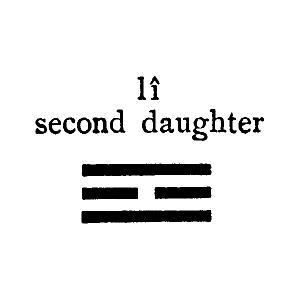
The two trigrams

The Judgement
The Wanderer is the stranger in a strange land: whoever is far from home, has just changed city, job or surroundings, feels like a guest rather than the master of their situation. The ancient text says that in this condition there may be some small attainment and progress, not great things; but if the stranger is firm and correct as he ought to be, there will be good fortune. Legge explains that the traveller must cultivate two qualities: humility and integrity. With these he avoids dangers and obtains what is possible. If lately you feel like you are passing through, in a temporary job, a relationship just begun, a city where you know no one, this hexagram tells you not to expect too much and not to lose your correctness in order to be accepted. The practical advice: travel light, respect the rules of the place, keep your means and trusted people with you, and do not play the big shot. Whoever behaves well as a guest always finds an open door, and in the end a home too.
Source: James Legge, The Yî King (Sacred Books of the East, vol. XVI) (1882) · read the original passage
The Image
Fire on the mountain: it catches the grass, runs over the whole surface, does not stay long anywhere and soon disappears, like the traveller. The wise person, says the image, uses wisdom and caution in punishments and does not let disputes drag on. For you it means that conflicts should be closed quickly and with measure, without vindictiveness: a clear reproach and then enough, a matter resolved and then filed away. If you have an open argument with someone, do not let it burn for weeks. Face it today, with justice, and put it out.
Source: James Legge, The Yî King (Sacred Books of the East, vol. XVI) (1882) · read the original passage
The six lines
First line
First line: the stranger is mean and meanly occupied, and so brings further misfortune on himself. It is not the kind of work that makes him so, Legge explains, but the fact that his mind and aim have been emptied of everything good. Be careful: if, feeling out of place, you stoop to gossip, petty cunning, unworthy savings, you lose everyone's respect, and your own. Even as a guest, even in a modest position, keep your aim high and behave with dignity.
Source: James Legge, The Yî King (Sacred Books of the East, vol. XVI) (1882) · read the original passage
Second line
Second line: the stranger has found lodging, carries his means of livelihood with him and is accompanied by good and trusty servants. It is the best condition for someone on a journey: a place to sleep, resources of his own, people to rely on. The text does not say so, but the omen is good. If you are starting a new phase, secure these three things: a base, financial independence, one or two allies you can truly trust. With these, the state of passing through becomes bearable, and even pleasant.
Source: James Legge, The Yî King (Sacred Books of the East, vol. XVI) (1882) · read the original passage
Third line
Third line: the stranger burns his own lodging and loses his servants. However firm and correct he tries to be, he will be in peril. It is the image of someone who, in surroundings not their own, treats the people who help them with arrogance and violence, and ends up without a roof and without allies. Be careful how you treat those who work with you or for you, especially when you are new: a wrong tone can burn in a day what was protecting you. If you have already gone too far, apologise without waiting.
Source: James Legge, The Yî King (Sacred Books of the East, vol. XVI) (1882) · read the original passage
Fourth line
Fourth line: the traveller has found shelter, has enough to live on and also has an axe to defend himself; and yet he says: I am not at ease in my mind. He has an arrangement, but not his true place. If you recognise yourself in this unease, a job that pays but does not belong to you, a house you do not feel is yours, do not pretend all is well. The axe recalls caution: protect what you have, but keep looking for the position that truly corresponds to you. Inner quiet will come when you are in your place.
Source: James Legge, The Yî King (Sacred Books of the East, vol. XVI) (1882) · read the original passage
Fifth line
Fifth line: you shoot at a pheasant; you lose the arrow, but in the end you obtain praise and a high charge. In antiquity the pheasant was the gift with which a travelling officer introduced himself at a foreign court: here it is the gesture with which you make yourself known. It costs something, the lost arrow, that is an investment, a risk, a first effort not repaid; but then friends support you and those who matter appreciate you. If you are new to an environment, present yourself with elegance and generosity, and accept losing a little to gain standing.
Source: James Legge, The Yî King (Sacred Books of the East, vol. XVI) (1882) · read the original passage
Sixth line
Sixth line: a bird burns its own nest. The stranger first laughs, then cries out. He has lost too readily and too easily his ox-like docility, that is, the meekness a guest ought to have. There will be misfortune. It is the warning for someone who, having risen high in surroundings not their own, gets carried away and turns arrogant: they close their mind to every counsel and destroy their own home. Beware the euphoria of success while you are still passing through. Stay humble, listen, and do not burn your bridges.