21. Biting Through
噬嗑 · Shì Kè · Il Morso Deciso · lines from the bottom: 100101
The two trigrams
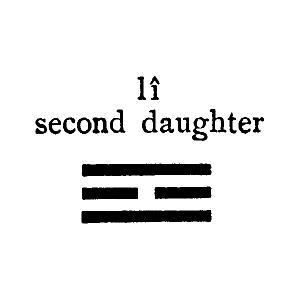
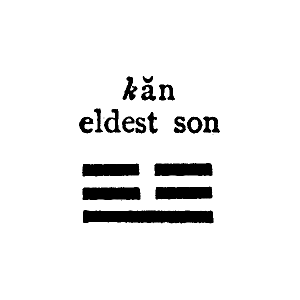
The Judgement
Biting Through is the hexagram of a mouth that cannot close because something is in the way: an obstacle that prevents union. The text promises that things will go forward successfully, but says clearly how: it is advantageous to use the force of the law, that is, clear rules and certain consequences. In plain words, something, or someone, has come between you and the people you should be getting along with: a misunderstanding left to fester, a colleague sowing discord, a habit that spoils harmony at home, an unsettled debt. As long as that obstacle stays there, there will be no understanding. If these days you feel that patience and goodwill are no longer enough, this hexagram backs you: it is time to step in decisively, to name the problem out loud and to set rules that hold for everyone. The practical advice is not to punish on impulse but with clarity: decide first which behaviour is no longer acceptable, communicate it plainly, and then keep your word on the consequences. Firmness applied with justice does not divide, it reunites.
Source: James Legge, The Yî King (Sacred Books of the East, vol. XVI) (1882) · read the original passage
The Image
The image is that of thunder and lightning together: force and light, which in nature always come as a pair. The ancient kings, the text says, framed their penalties with intelligence and made their laws known. If you have to bring order to a situation, in the family, with a collaborator, in a group, this image points you to the method: rigour must go with clarity. The practical advice is not to let sanctions fall by surprise: explain the rules first, make sure everyone knows them, and only then apply them without exceptions. Whoever knows what awaits them accepts firmness; whoever is caught off guard experiences it as injustice.
Source: James Legge, The Yî King (Sacred Books of the East, vol. XVI) (1882) · read the original passage
The six lines
First line
The first line shows someone stopped at the first step, their feet held fast: a correction that arrives early, for a fault still small. The text says there is no error, and that is good news: whoever is called to order at the start has no time to go seriously wrong. If a reprimand, a fine, a flat no has come your way, do not take it as a condemnation. The advice is to accept the brake humbly and not to persist in the wrong direction: a small stop now spares you a big trouble later.
Source: James Legge, The Yî King (Sacred Books of the East, vol. XVI) (1882) · read the original passage
Second line
The second line shows an easy bite, into soft flesh, which nevertheless goes deeper than seemed necessary. There is no error: when someone stubborn must be corrected, firmness has to be kept up and even increased until the result is secured. If you are dealing with a person who refuses to understand, a child, an employee, a tenant, do not stop halfway just because the first part was simple. The advice is to stay measured in tone but not to let go until the behaviour has really changed.
Source: James Legge, The Yî King (Sacred Books of the East, vol. XVI) (1882) · read the original passage
Third line
The third line shows someone gnawing dried flesh and finding something disagreeable in it: the task is hard and holds an unpleasant surprise besides. There will be some small cause for regret, but no great error. It is the situation of someone tackling an old, festering matter who discovers that the person being corrected reacts with resentment, or that the problem has deeper roots. If you feel uneasy in the role of the one who sets things straight, know that the position is not your best but the cause is just. The advice: go on without hardening, and accept a little bitterness.
Source: James Legge, The Yî King (Sacred Books of the East, vol. XVI) (1882) · read the original passage
Fourth line
The fourth line shows someone gnawing flesh dried on the bone, the hardest task, and receiving the pledges of money and arrows: in antiquity these were the guarantees the parties deposited before the judge, a sign that here you are exercising a real role as arbiter. The text asks you to realise the difficulty and to be firm: then fortune will be with you. If you find yourself settling a dispute, in the family, between partners, between neighbours, do not underestimate it and do not look for shortcuts. The advice is to hear all sides, decide justly and not let yourself be intimidated.
Source: James Legge, The Yî King (Sacred Books of the East, vol. XVI) (1882) · read the original passage
Fifth line
The fifth line shows someone gnawing dried flesh and finding the yellow gold: the colour of justice and balance. It is the position of one who has the authority to judge and, being mild by nature, inclines to leniency; their judgments will be correct. But the text adds a caution: be firm and upright, aware of the peril of your position. If you are the one who must decide a delicate matter, do not confuse understanding with weakness. The advice is to be humane in manner and unbending in substance, so that your indulgence is not mistaken for a free pass.
Source: James Legge, The Yî King (Sacred Books of the East, vol. XVI) (1882) · read the original passage
Sixth line
The sixth line shows someone wearing the cangue and deprived of the use of their ears: the person who has ignored every warning and now suffers the heaviest consequence. The text does not hide the outcome: there will be evil. Here the action of the hexagram has passed, and what remains is someone persisting in error, deaf to all counsel. If you recognise yourself, or someone close to you, be careful: it is not yet too late to listen, but time is running out. The advice is to stop, ask those who care for you what they see, and for once keep quiet and listen to the end.