12. Standstill
否 · pǐ · Il Ristagno · lines from the bottom: 000111
The two trigrams
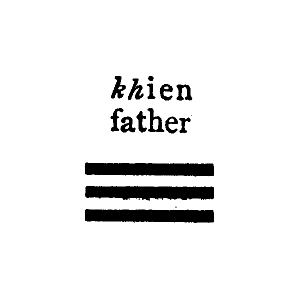
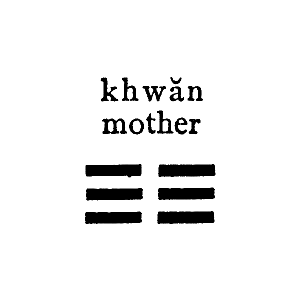
The Judgement
This hexagram is the exact opposite of Peace: heaven is above and rises, earth is below and sinks, and the two do not meet. The Judgment speaks of a want of good understanding between people, between the different classes, and says that the moment is unfavourable to the firm and correct course of the superior man. The great is gone and the little is come: the generous forces have withdrawn and what prevails is the petty stuff, small interests, closed doors. It is the hexagram of the seventh month, when growth is over and decay begins. If these days you feel there is no dialogue, at home, at the office, with your partner, that you speak and are not understood, that every honest proposal is met with suspicion, that is no accident and it is not your fault: it is the climate of the moment. The Judgment does not ask you to fight; it asks you to recognise the standstill for what it is and not to waste your best energies against a wall. Practical advice: postpone important initiatives, do not try to convince those who will not listen, keep your integrity sheltered, and use this time to look after what depends on you alone.
Source: James Legge, The Yî King (Sacred Books of the East, vol. XVI) (1882) · read the original passage
The Image
The Image is heaven and earth not in intercommunication: each going its own way, with no exchange. The wise person, Legge says, in accordance with this, restrains the manifestation of his virtue and avoids the calamities that threaten him; there is no opportunity of conferring on him the glory of emolument. It means that, in such a time, merit is neither recognised nor rewarded, and showing yourself too much only exposes you to danger. If you were expecting a recognition that does not come, this Image explains why. Advice: keep a low profile for now, do not seek visibility, and preserve your qualities for when they will count again.
Source: James Legge, The Yî King (Sacred Books of the East, vol. XVI) (1882) · read the original passage
The six lines
First line
First line: the image of grass pulled up, bringing with it the other stalks to which its roots are connected. With firm correctness there will be good fortune and progress. Even in standstill there are those who can change their minds: you are at the start of a cluster of small people, and if you turn towards what is right, the others follow. The commentary says the will is bent on serving the one who leads honestly. If you are in a closed environment, you can be the first to turn round. Advice: choose the right side, even if it is not yet the winning one.
Source: James Legge, The Yî King (Sacred Books of the East, vol. XVI) (1882) · read the original passage
Second line
Second line: patient and obedient. For the small man who comports himself so there will be good fortune; if the great man comports himself as the distress and obstruction require, he will have success. In standstill, adapting and keeping quiet serves those with few ambitions; but even someone of great worth, if he accepts the moment patiently without being disordered by the herd, will come out of the difficulty well. If at work you have to swallow a few bitter pills, this line tells you it is wise. Advice: endure without compromising your principles.
Source: James Legge, The Yî King (Sacred Books of the East, vol. XVI) (1882) · read the original passage
Third line
Third line: someone is ashamed of the purpose folded in his breast. This is the line of one who would like to do something wrong, to take advantage, to betray, to turn against, but has not the strength for it, and is left with the shame of the mere thought. The commentary says it is owing to the inappropriateness of his position. If you recognise yourself, if lately you have been nursing an idea you are not proud of, no warning is needed: the shame you feel is already the answer. Advice: let that purpose drop and make peace with yourself.
Source: James Legge, The Yî King (Sacred Books of the East, vol. XVI) (1882) · read the original passage
Fourth line
Fourth line: you act in accordance with the ordination of Heaven and commit no error; your companions will come and share in your happiness. You are close to the one in command, strong but tempered by your position, and you do what is right without forcing. Whether it is the will of Heaven or the mandate received from the one who guides you, the commentary says the purpose of your mind can be carried into effect. It is the first sign that the standstill is loosening. Advice: do your part loyally, and those near you will benefit along with you.
Source: James Legge, The Yî King (Sacred Books of the East, vol. XVI) (1882) · read the original passage
Fifth line
Fifth line: here is the one who brings the distress and obstruction to a close, the great man and fortunate. But let him say: We may perish! We may perish! So shall the state of things become firm, as if bound to a clump of bushy mulberry trees. The standstill ends thanks to someone in the right place, but at the very moment of success he must stay watchful, reminding himself that everything could still collapse. If you are coming out of a hard period, do not drop your guard too soon. Advice: celebrate in moderation and anchor your roots before you consider yourself safe.
Source: James Legge, The Yî King (Sacred Books of the East, vol. XVI) (1882) · read the original passage
Sixth line
Sixth line: the overthrow and removal of the condition of distress and obstruction. Before this there was that condition; hereafter there will be joy. This is the line of the turning point: the standstill has reached its limit and, in the natural order of things, gives way to its opposite. The commentary asks: how could it be prolonged? If you have been through months of closed doors, misunderstanding, blocked roads, this line announces that the wind is changing. Advice: prepare for the joy with the same seriousness with which you bore the strain, and do not drag resentment along with you.