Ten of Wands
Minor Arcana · Wands · number 10 · Dieci di Bastoni
Upright
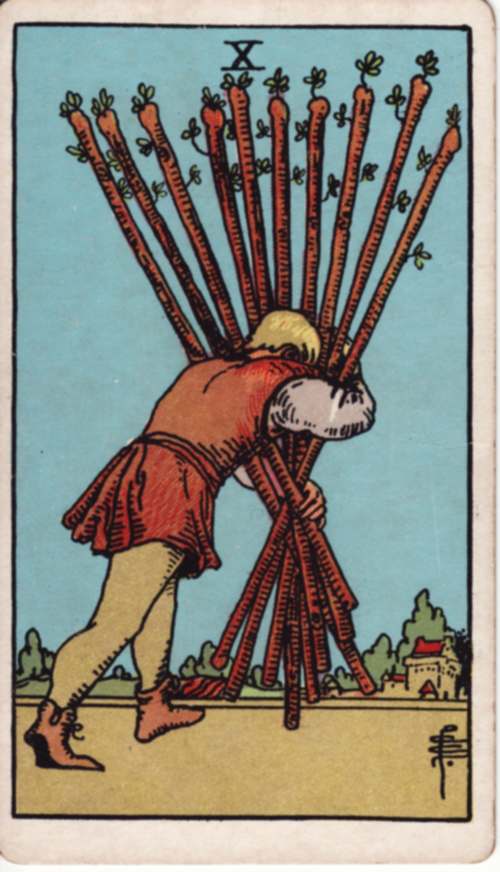
The Ten of Wands is a man bent under ten staves: oppression, says Waite, but also fortune and gain, and then the weight of that very fortune. Do you recognise yourself? You got what you wanted, the job, the house, the family, and now it crushes you. If these days you feel worn out by responsibilities you once wished for, it is no accident. The card also warns of false appearances: beware of anyone who shows themselves as other than they are. Waite sets aside the reading that links this card to honour and good faith, and adds three concrete details: the place the man is walking towards may suffer from the rods he carries, that is, your load may weigh on those waiting for you at home; if the Nine of Swords follows, success is stultified; and if a lawsuit is involved, the loss is certain. If you have a dispute pending, this is not the time to go to court. The practical advice: list everything you carry and hand over at least one staff. Not all of that load is truly yours.
Source: Arthur Edward Waite, The Pictorial Key to the Tarot (1910) · read the original passage
Reversed
Reversed, the Ten of Wands sets down the weight but leaves chaos: contrarieties, difficulties, intrigues. Things go wrong in small, continuous ways, and around you someone is weaving plots you do not see. If these days you sense that every procedure jams and that in the office or in the family people talk behind your back, it is no accident. It is not a sentence: it is an invitation to clean house. Beware of under-the-table alliances and half-whispered promises. The practical advice: tackle matters one at a time, in broad daylight, and ask for direct clarification from anyone who seems ambiguous.