8. Holding Together
比 · bǐ · La Solidarietà · lines from the bottom: 000010
The two trigrams
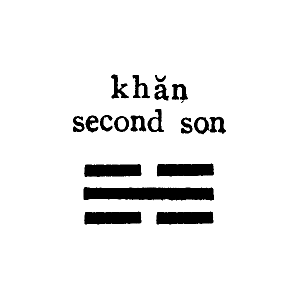
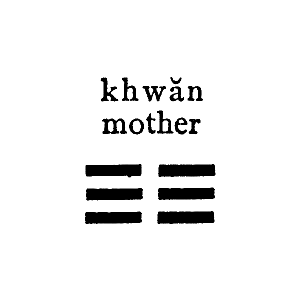
The Judgement
This hexagram is about union, about holding together: a couple, a family, a working group, a community gathering around a point of reference. The Judgment begins well: there is good fortune. But it immediately adds a condition addressed to whoever stands at the centre of this union, and perhaps that centre is you. Re-examine yourself, it says, as if by divination, and ask whether your virtue is great, unintermitting, and firm. If it is, there will be no error. In other words: before asking others to rely on you, make sure you are truly reliable, consistently, not only on the good days. Then the Judgment describes what happens: those who have no rest will come to you, seeking shelter, and for those who are too late in coming it will be ill. It is a double invitation. If you are the point of reference, keep the door open for those who are restless. If instead you are the one seeking a bond, a group, a person to join, do not put it off: whoever waits too long finds the door shut. Practical advice: make today the gesture of union you have been postponing, a phone call, a proposal, a reconciliation.
Source: James Legge, The Yî King (Sacred Books of the East, vol. XVI) (1882) · read the original passage
The Image
The Image is the earth with water over it: water adapts to the earth, fills it and holds it together, leaving no gaps. The ancient kings, Legge says, in accordance with this, established the various states and maintained an affectionate relation to their princes. The king appears here not only as the centre, but as the cause of union. For you this applies to everyday life: if you head something, a family, a team, an association, the union is not kept by giving orders but by affection and presence. Advice: give personal attention to each individual, not only to the group as a whole.
Source: James Legge, The Yî King (Sacred Books of the East, vol. XVI) (1882) · read the original passage
The six lines
First line
First line: you seek by your sincerity to win the attachment of the one you care about, and there will be no error. Let the breast be full of sincerity as an earthenware vessel is full of its contents, and in the end it will bring other advantages. At the start of a relationship, whether in love, friendship or work, strategies are not needed: what is needed is to be genuine, simple, unadorned. If you are sincere all the way through, not only will the bond form, it will bring you benefits you cannot imagine now.
Source: James Legge, The Yî King (Sacred Books of the East, vol. XVI) (1882) · read the original passage
Second line
Second line: the movement towards union and attachment proceeds from the inward mind. With firm correctness there will be good fortune. The bond you are seeking springs from a conviction of your own, not from outside pressure or convenience. If you are wondering whether to join someone, a partner, a business associate, a group, listen to the answer that comes from within: if it is yes, it will be fortunate. The commentary adds that this way you do not fail in what is proper to yourself. Advice: do not betray yourself in order to be accepted.
Source: James Legge, The Yî King (Sacred Books of the East, vol. XVI) (1882) · read the original passage
Third line
Third line: you are seeking union with such as ought not to be associated with. It is a plain warning: not every company is good for you. If you are binding yourself to people who do not respect you, to an environment that drags you down, to a partner with questionable methods, the commentary asks: will not injury be the result? If you recognise yourself here, it is not a sentence, but an invitation to look at whom you spend your time with. Advice: distance yourself gracefully from those who do not share your values.
Source: James Legge, The Yî King (Sacred Books of the East, vol. XVI) (1882) · read the original passage
Fourth line
Fourth line: you seek union with the one beyond yourself, higher up; with firm correctness there will be good fortune. You are turning to an authoritative and worthy person, the boss you respect, the teacher, the partner who helps you grow, and the commentary approves: you are following the one above you, and the object is worthy. This is not servility, it is recognising who deserves trust. Advice: show your loyalty through deeds, with constancy and honesty, and the relationship will repay you.
Source: James Legge, The Yî King (Sacred Books of the East, vol. XVI) (1882) · read the original passage
Fifth line
Fifth line: this is the most illustrious instance of seeking union and attachment. We see the king urging his pursuit of the game only in three directions, allowing the escape of all the animals before him, while the people of his towns do not warn one another to prevent it. There will be good fortune. The king leaves one side open: he does not want to take everything, and his people know it and share his spirit. If you are at the centre of a group, do not hold anyone by force. Let those who want to go, go; those who stay, stay by choice. Advice: lead with generosity and without obsessive control.
Source: James Legge, The Yî King (Sacred Books of the East, vol. XVI) (1882) · read the original passage
Sixth line
Sixth line: someone seeks union and attachment without having taken the first step to that end. There will be evil. It is too late: the moment for union has passed and whoever did not begin in time no longer finds an opening. If you postponed a clarification, a proposal, a reconciliation, until the others had already organised themselves without you, this line explains why it is so hard now. It is not a final sentence, but a lesson. Advice: next time, move first and do not wait for others to come looking for you.