6. Conflict
訟 · sòng · La Lite · lines from the bottom: 010111
The two trigrams
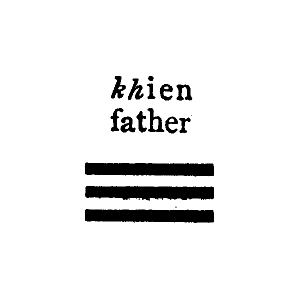
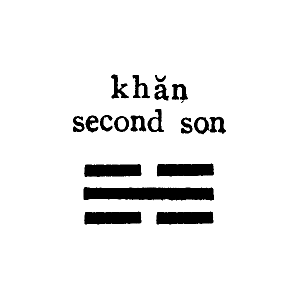
The Judgement
This hexagram is about conflict, about contending, and it describes with precision the situation you may be in: you are right, you are sincere in your position, and yet you meet opposition and obstruction. That is no accident, and it is not your fault: it is the nature of this moment, with strength above and peril below eyeing each other. The Judgment gives you two roads. If you cherish an apprehensive caution, there will be good fortune; if instead you must prosecute the contention to the bitter end, to the very last word, there will be evil. It means that winning at all costs, in a lawsuit, in a family quarrel, in a workplace rivalry, does not pay even for the one who is right. Then two concrete indications: it will be advantageous to see the great man, that is, to turn to an authoritative and impartial person, a mediator, a wise lawyer, a respected elder; and it will not be advantageous to cross the great stream, that is, this is not the time to embark on risky ventures or irreversible decisions. Practical advice: before you answer whoever is attacking you, get counsel from someone outside the fray, and sign nothing until the tension drops.
Source: James Legge, The Yî King (Sacred Books of the East, vol. XVI) (1882) · read the original passage
The Image
The Image is heaven and water moving away from each other: the sky rises, the water falls, and from this drawing apart conflict is born. The wise person, Legge says, seeing this, in the transaction of affairs takes good counsel about his first steps. This is precious guidance for you: most conflicts come from a wrong beginning, a contract badly read, a verbal agreement never written down, an expectation never made clear. If you are about to start something, a joint project, living together, a business partnership, clear everything up now. Advice: put the rules in black and white before you set off.
Source: James Legge, The Yî King (Sacred Books of the East, vol. XVI) (1882) · read the original passage
The six lines
First line
First line: you do not perpetuate the matter the contention is about. You will suffer the small injury of being spoken against, but the end will be fortunate. You are at the start of a spat, perhaps with a neighbour, a colleague, a relative, and this line tells you to let it drop. Someone will say you gave in, that you did not defend yourself: bear it. The commentary adds that your argument is clear all the same. Advice: do not reply to that last message, and you will see the thing fade out on its own.
Source: James Legge, The Yî King (Sacred Books of the East, vol. XVI) (1882) · read the original passage
Second line
Second line: you are unequal to the contention. If you retire and keep concealed, where the inhabitants of your city are only three hundred families, you will fall into no mistake. You would like to fight, you even have the strength, but the one facing you stands higher than you, and pressing on would be like bringing calamity on yourself with your own hands. If you are quarrelling with a boss, an institution, someone with more power, this line advises a humble retreat: step back, return to your small, quiet life, and there will be no blame.
Source: James Legge, The Yî King (Sacred Books of the East, vol. XVI) (1882) · read the original passage
Third line
Third line: you keep to the old place assigned for your support, firmly correct. Perilous as the position is, there will be good fortune in the end. Should you happen to engage in the king's business, you will not claim the merit of the achievement. This is the line of someone who lives on what he has honestly earned and stays out of the arena. If everyone around you is fighting over positions and recognition, hold on to what is yours, do your job well, and leave the honours to others: safety lies there.
Source: James Legge, The Yî King (Sacred Books of the East, vol. XVI) (1882) · read the original passage
Fourth line
Fourth line: you are unequal to the contention; you return to the study of Heaven's ordinances, change your wish to contend, and rest in being firm and correct. There will be good fortune. You wanted a fight, but in front of you stands someone you cannot beat and beside you someone who cannot help. The commentary says that returning to principle and giving up the quarrel are one and the same: the quarrel was wrong from the start. If you recognise yourself here, change your mind without shame. Giving up a wrong war is already a win.
Source: James Legge, The Yî King (Sacred Books of the East, vol. XVI) (1882) · read the original passage
Fifth line
Fifth line: you contend, and with great good fortune. This is the only line in the hexagram where the dispute goes well, because the one conducting it holds the due mean, in the correct place, with balance and integrity. If your cause is just and you turn to whoever has the authority to decide, a judge, an arbitrator, an impartial manager, the outcome will be in your favour. Advice: present your case calmly, with the facts in order, without exaggeration; the fairness you show is what wins it for you.
Source: James Legge, The Yî King (Sacred Books of the East, vol. XVI) (1882) · read the original passage
Sixth line
Sixth line: you may have the leathern belt conferred on you by the sovereign, and thrice in a morning it shall be taken from you. You have the strength to win the dispute, and perhaps you really do win it, but if you keep contending without end, every prize slips away as soon as it is gained. This is the warning for those who have made conflict a way of life: a victory won like this brings no respect and does not last. If you recognise yourself, stop now, with a modest gain that is truly yours, instead of raising the stakes until you lose everything.