25. Innocence
无妄 · Wú Wàng · L'Innocenza · lines from the bottom: 100111
The two trigrams
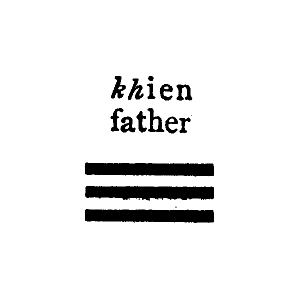
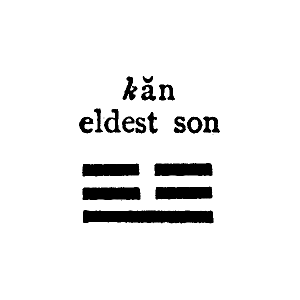
The Judgement
Innocence is the hexagram of someone who acts without ulterior motives, without calculation and without pretence: the quality the text attributes to heaven itself and to the highest form of humanity. The promise is great: full progress and success, with advantage in being firm and correct. But right after comes the condition, stark: if you or your action are not correct, you will fall into errors, and it will not serve you to move in any direction. It is no accident that this hexagram reaches you when you wonder whether being transparent still pays, in a job where everyone looks out for themselves, in a relationship where you begin keeping score, in a negotiation where the temptation to tell a half-lie is strong. The I Ching answers that sincerity is not naivety: it is the source of your strength, and the closer you come to it, the more your influence grows and the results arrive by themselves. The practical advice is to do the right thing today because it is right, not for the return you expect, and to check your motives honestly before every step. If you find a calculation behind a gesture, stop: in this time, acting with a crooked intention does more harm than not acting at all.
Source: James Legge, The Yî King (Sacred Books of the East, vol. XVI) (1882) · read the original passage
The Image
The image is that of thunder rolling under the whole sky and giving each thing its nature, free from all insincerity: the energy of spring that awakens each being according to what it is. The ancient kings, the text says, made their regulations in complete accordance with the seasons, and so nourished all things. If you have to organise, lead, educate, this is the model: do not force people and situations against their natural time. The practical advice is to respect rhythms, your own and other people's: do not ask a child to run before walking, do not demand of yourself in January what belongs to June, do not sow out of season.
Source: James Legge, The Yî King (Sacred Books of the East, vol. XVI) (1882) · read the original passage
The six lines
First line
The first line shows someone free from all insincerity: their advance will be accompanied by good fortune. It is the beginning of the movement, and whoever makes it with a clean heart sets the tone for everything that follows. If you are about to take the first step in something, a proposal, a new acquaintance, a job, do not build yourself a strategy: present yourself as you are and say what you really want. The advice is to trust your spontaneity at this moment, because it is precisely what will open the way and get you what you desire.
Source: James Legge, The Yî King (Sacred Books of the East, vol. XVI) (1882) · read the original passage
Second line
The second line shows someone who reaps without having ploughed in order to reap, and gathers the produce of the third year's fields without having cultivated them the first year for that end: to such a person there is advantage in whatever direction they move. It does not describe an idler, but a person who works without thinking about the gain, and for that very reason the gain comes. If these days you wonder whether it is worth committing to something that brings no immediate return, this line tells you to do it for the value of the thing itself. The advice: do well what is in front of you and let the results come when it is their time.
Source: James Legge, The Yî King (Sacred Books of the East, vol. XVI) (1882) · read the original passage
Third line
The third line shows calamity befalling someone free from insincerity: like a tethered ox that a passer-by finds and carries off, while the people of the neighbourhood are accused and suffer the harm. It is the injustice that strikes the innocent: you pay for something you did not do, a fault not yours is pinned on you, you lose something through a stranger's dishonesty. If you recognise yourself, know that the text does not blame you. The advice is not to let the wrong you suffered make you distrustful or vindictive: keep behaving well, calmly set the facts straight, and leave the rest to time.
Source: James Legge, The Yî King (Sacred Books of the East, vol. XVI) (1882) · read the original passage
Fourth line
The fourth line shows a case in which, if the one living it can remain firm and correct, there will be no error. It is a line of warning more than of promise: you are in a position not entirely yours, without secure support, and the temptation is to force matters to settle yourself. If you feel on uncertain footing, in a post that does not fit you, in a relationship without guarantees, the advice is not to look for shortcuts and to hold tight to what you know is right. Firmness here produces no great results, but it keeps you from going wrong, and at this moment that is already a lot.
Source: James Legge, The Yî King (Sacred Books of the East, vol. XVI) (1882) · read the original passage
Fifth line
The fifth line shows someone free from all insincerity who has nevertheless fallen ill: let them use no medicine, and they will have cause for joy in recovery. The sense is not to refuse care, but not to rush to intervene against an ill that does not spring from any error of yours. If a trouble has befallen you through no fault of your own, an ailment, a hitch, a stretch of bad luck, do not race after hasty remedies, forced explanations or culprits. The advice is to remain calm and patient: a way out will open without your having to force it, and the recovery will be cause for joy.
Source: James Legge, The Yî King (Sacred Books of the East, vol. XVI) (1882) · read the original passage
Sixth line
The sixth line shows someone free from insincerity who will nonetheless surely fall into error if they act: their action will not be advantageous in any way. We are at the top of the hexagram, where the movement has run its course. Even good faith, here, is not enough to justify a new step: the time is over, and pressing on would be a mistake however sincere the reasons. If you feel a situation has reached its natural conclusion, a project, an appointment, a love story, the advice is not to relaunch it. Stop, accept, and wait for a new time before moving again.